First-Person Park Operations Manual

Waterpark Simulator

Waterpark Simulator combines construction, direct service work, staff management, research, and multiplayer inside one first-person park. This wiki organizes the official version 1.0 information by the task in front of you: build a slide, stabilize daily operations, improve the park rating, or share the workload with other players. Every factual statement is tied to CayPlay’s official site, Steam store material, the version 1.0 announcement, or the current Steam achievement list. Where those sources do not publish an exact price, threshold, unlock cost, or efficiency value, the guide explains the decision without inventing a number.

Version 1.0Released July 31, 2026First-party sources
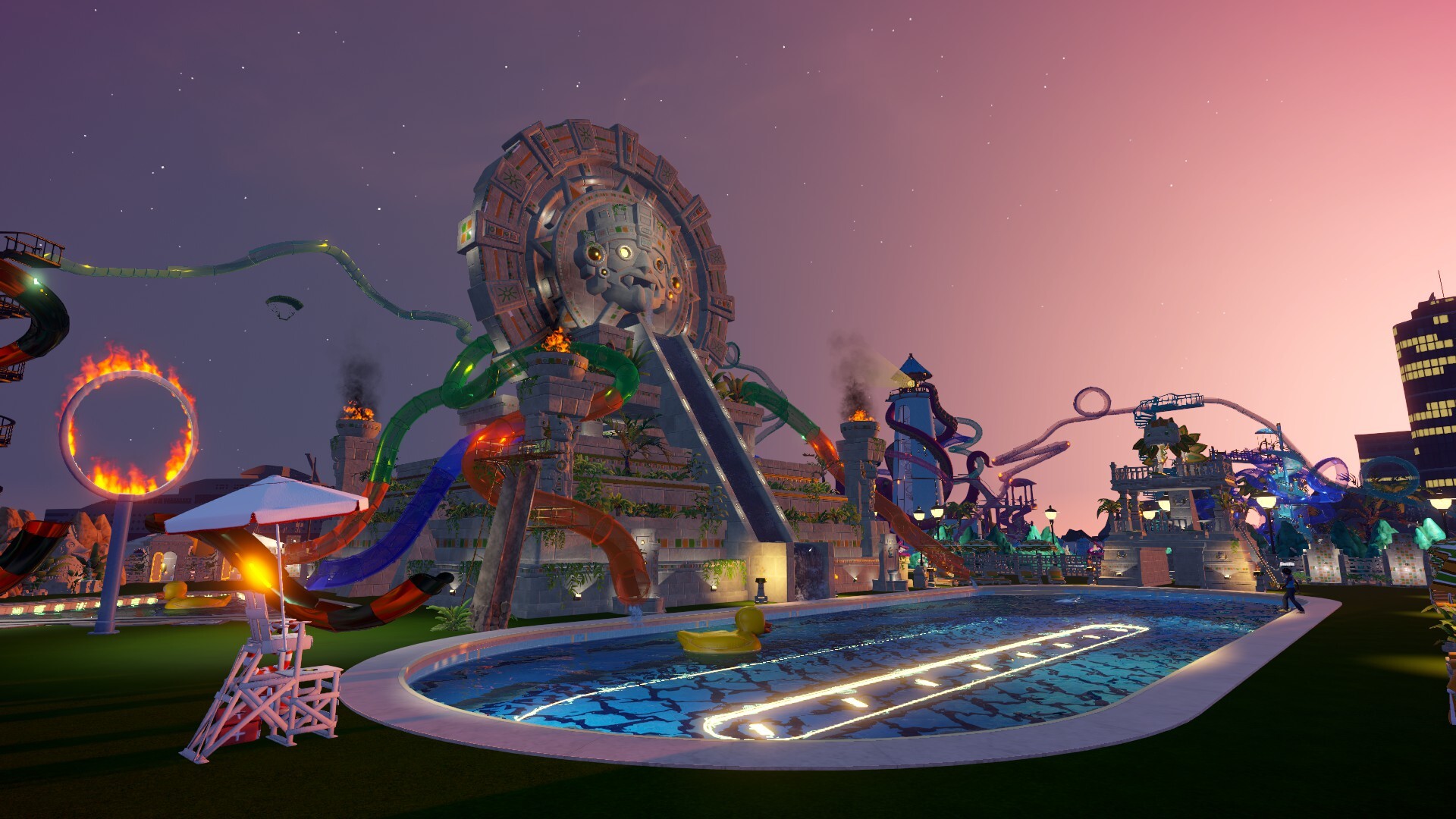
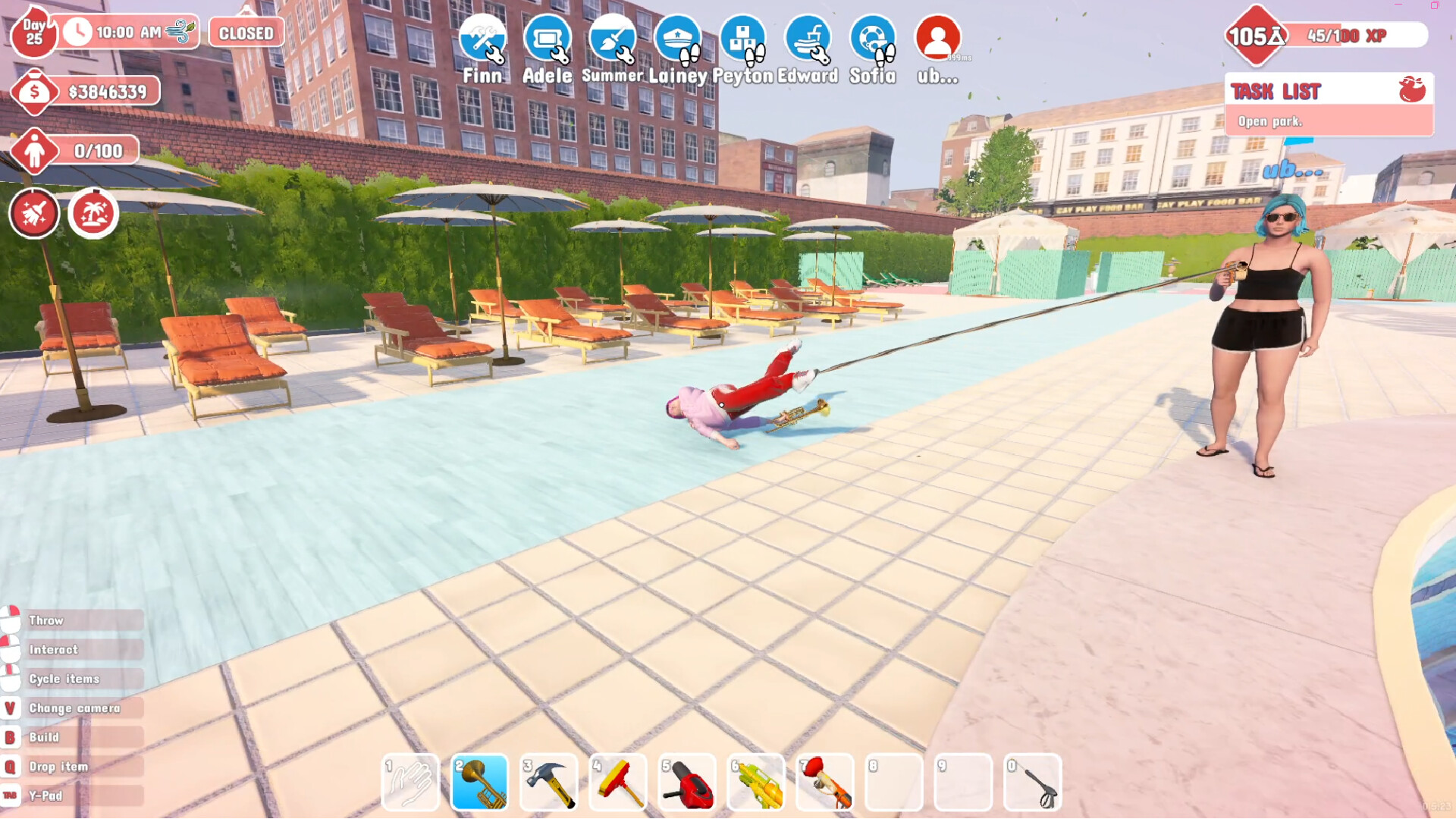
A first-party view of a working park brings construction, guests, attractions, and direct operations into the same frame.

Choose today’s park task

Jump directly to the part of the park you are planning, operating, or checking. These routes mirror the game’s first-person mix of construction, service work, progression, and co-op play.

July 31, 2026

Version 1.0 moved the park into full release

The launch update added multiplayer, the Beach map, research themes, custom slide building, character customization, staff additions, night operation, and weather modifiers.

Read more →

The road to five stars

The official version 1.0 material names four connected rating inputs and a diamond five-star destination. Treat the lane as an operations checklist, not an invented threshold calculator.

CleanlinessSlide funFood qualityGuest happiness
Star 1
Star 2
Star 3
Star 4
Star 5

Cleanliness, slide fun, food quality, and guest happiness are separate areas to inspect when the park rating stalls. Exact rating thresholds are not published here without a reviewed first-party value.

Build, run, and grow

The fieldbook keeps each decision attached to a real version 1.0 system: custom slides, direct maintenance work, three research branches, and multiplayer for four total players.

01

Shape the attraction plan

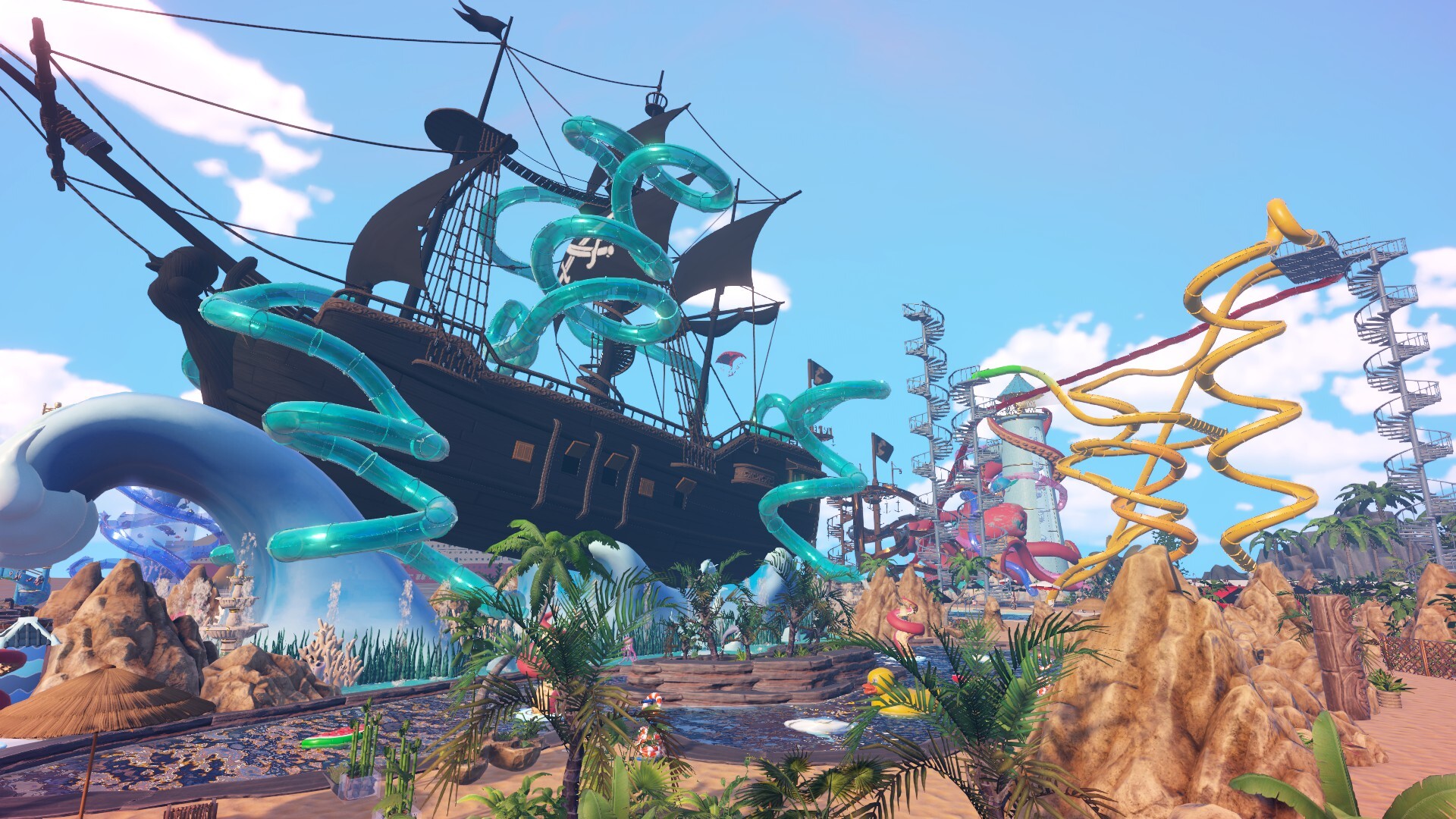
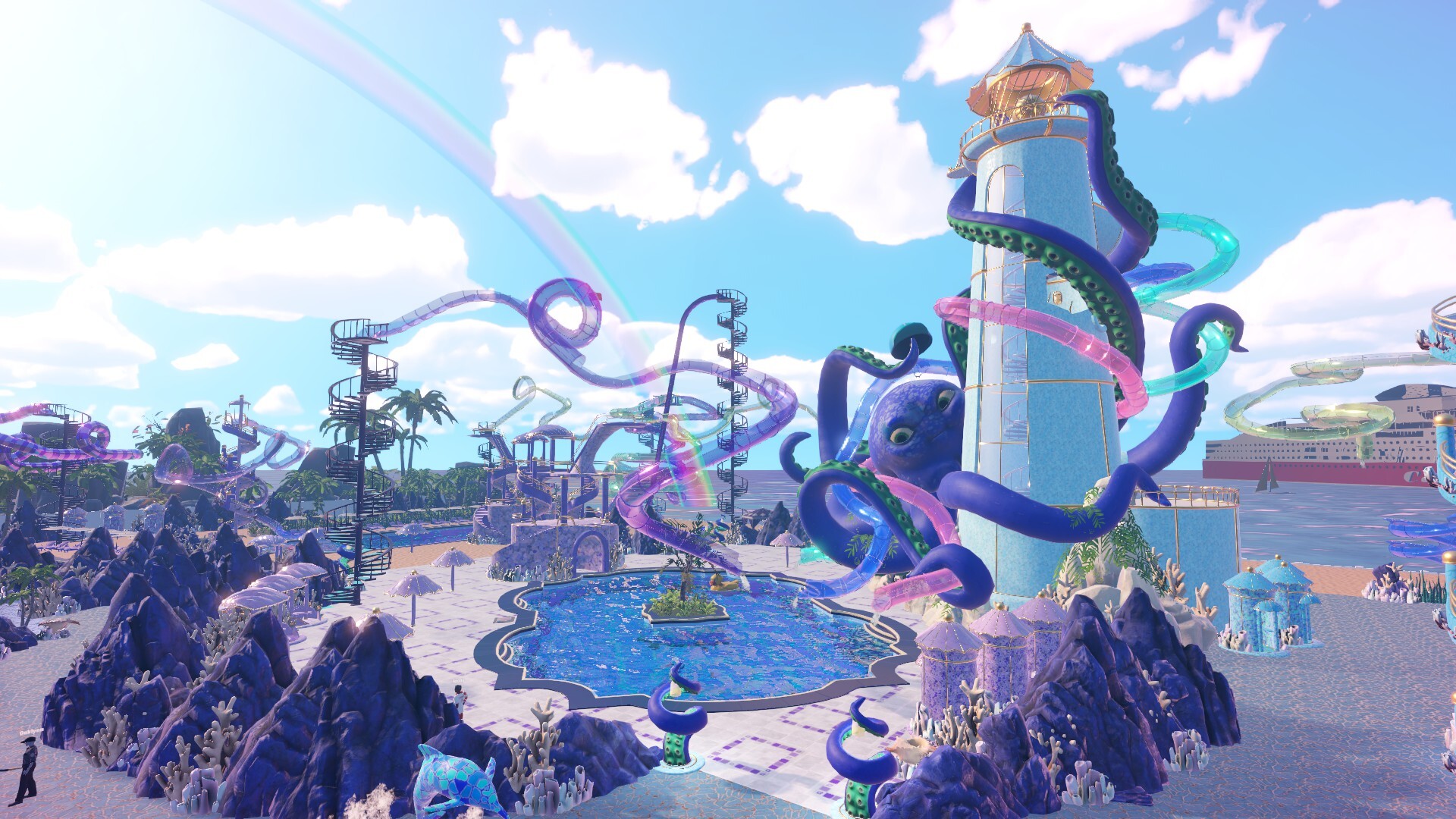
Use the slides and pools references to separate the physical build from the service work that keeps the finished attraction usable. The custom slide system supports player-built layouts, while first-party media shows loops and spirals as part of that construction language.

Open guide →
Shape the attraction plan
02

Operate from the ground

Ticket sales, food, cleaning, repairs, rescues, staff, and guest happiness belong to one park loop. The management guide groups those duties by what you can inspect and act on instead of promising an unsupported “perfect” layout or staffing ratio.

Open guide →
Operate from the ground
03

Unlock through the museum

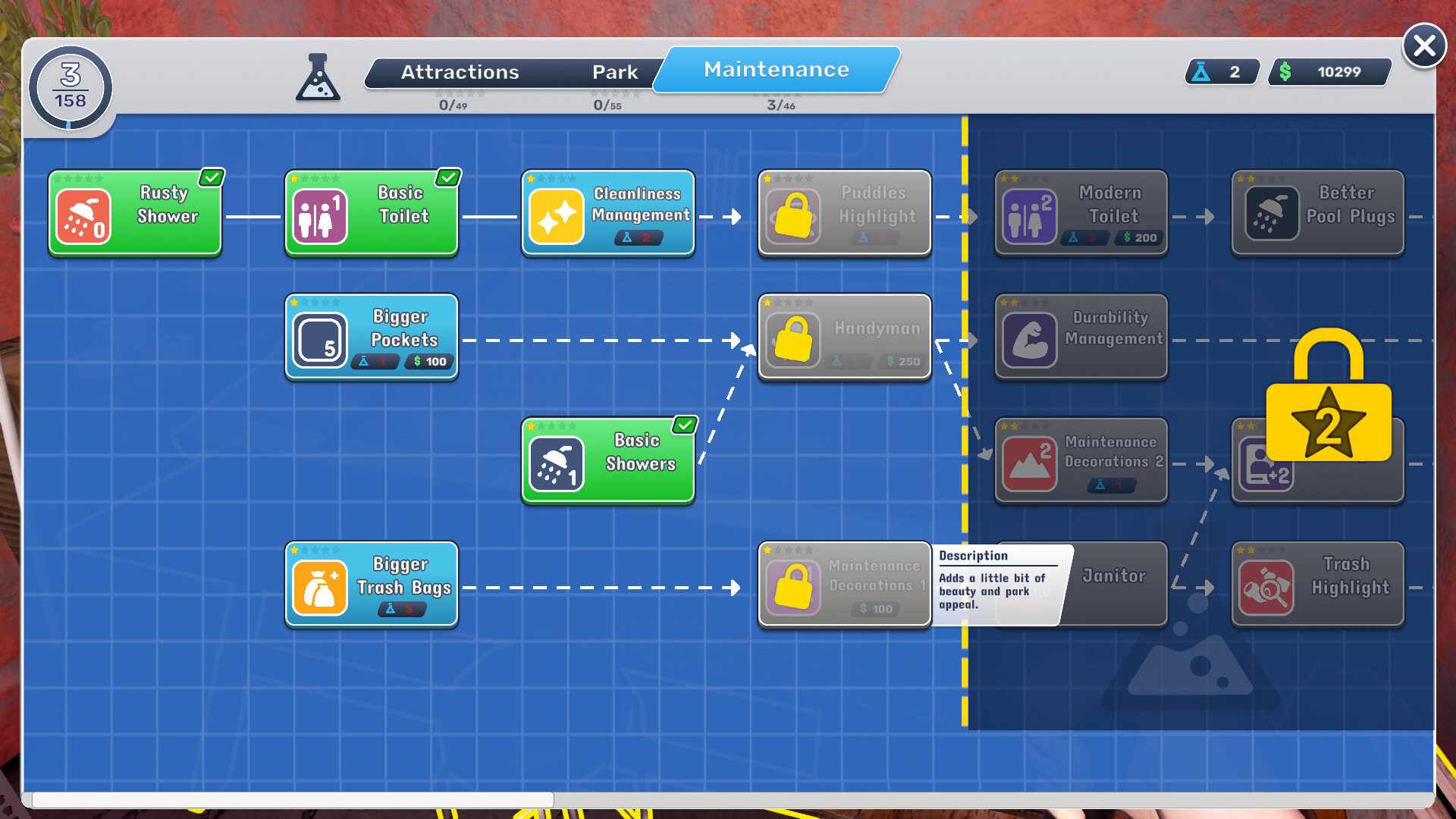
The museum links three quest-giving NPC roles, three currencies, and three research branches. The research reference keeps that verified structure intact and avoids assigning names or costs that are not present in the reviewed official material.

Open guide →
Unlock through the museum
04

Share the shift

Version 1.0 supports the host plus as many as three friends or strangers, for four players total. Optional proximity voice chat changes communication, but the park still revolves around the same building and operating systems.

Open guide →
Share the shift
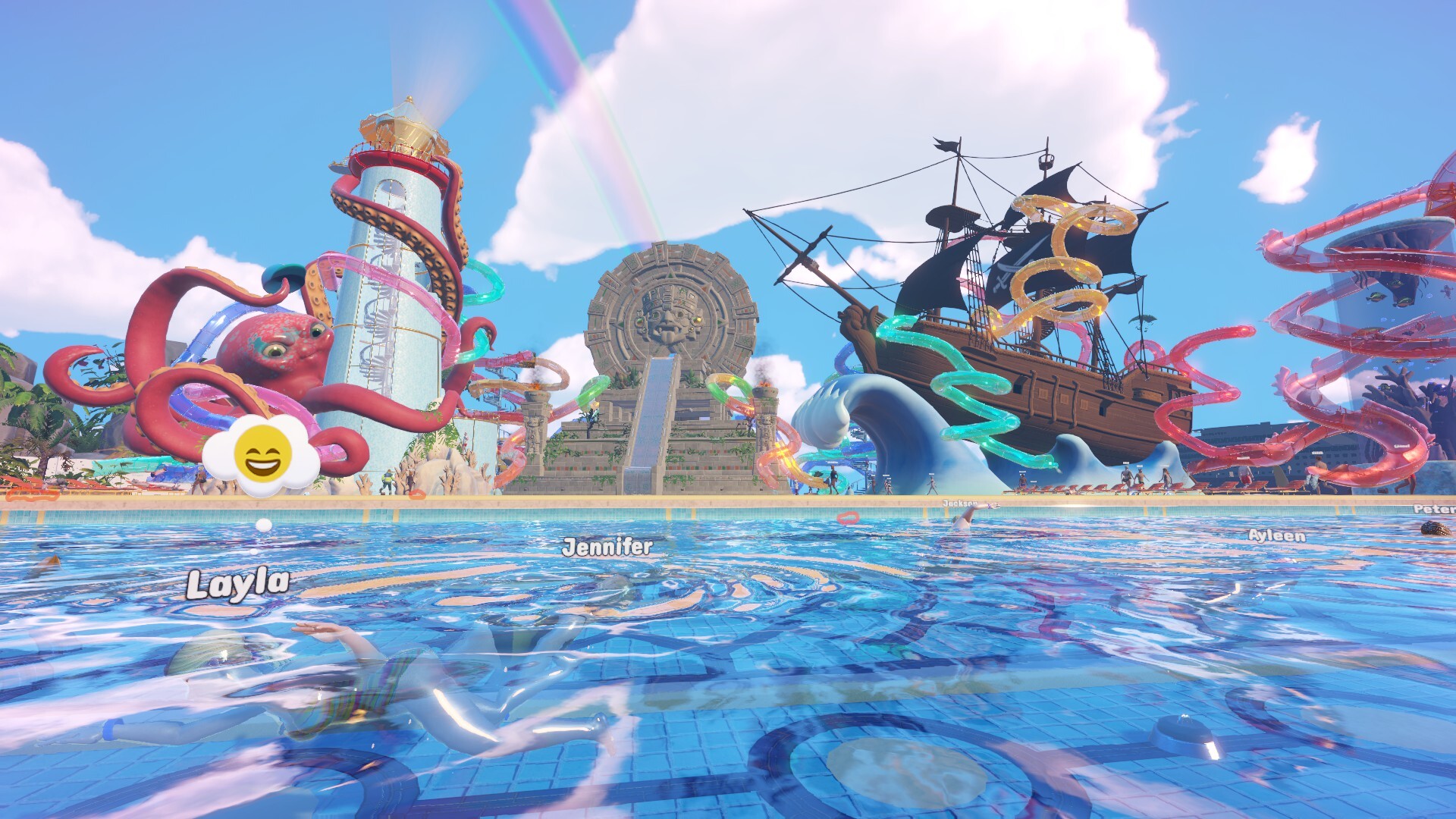
The first-person viewpoint makes park management a visible, physical workflow rather than a remote spreadsheet.

Operations manual

One park, four kinds of attention

One park, many connected jobs

A useful way to read the game is to separate four kinds of attention without treating them as isolated modes. Construction determines which slides, pools, and service spaces exist. Direct operations cover the hands-on work of selling food, cleaning, repairing equipment, rescuing visitors, and responding to what is happening in front of you. Management adds staff and guest happiness to that picture. Progression then turns those visible conditions into a park rating that reflects cleanliness, slide fun, food quality, and happiness.

That structure explains why a single narrow tip rarely solves a stalled park. A new attraction can expand what guests can do, but it does not replace cleaning or food quality. More staff can support the operation, but the official material does not provide a universal staffing ratio that fits every layout. The wiki therefore starts with the player’s current task and then links outward to the neighboring systems that the task can affect.

What version 1.0 adds to the fieldbook

Version 1.0 released on July 31, 2026 after Steam Early Access began on August 22, 2025. The launch announcement expands the fieldbook in several directions at once: multiplayer with up to three additional players, a Beach map that requires a new park because layouts do not transfer, Aztec, Sea, and Pirate research themes, custom slide layouts, character customization with five saved slots, new staff categories, night operation, and weather effects that apply bonuses or penalties.

These additions are reflected as separate reference routes only when they answer a distinct player question. Maps and themes remain a focused noindex reference because the official material supports a compact answer rather than a large scenario database. Achievements receive an indexable tracking page because Steam exposes 71 entries as of August 4, 2026, while individual achievement conditions are not reproduced without version-bound evidence. That keeps the site broad enough to be useful without splitting thin facts into artificial pages.

How to use the wiki without losing the park context

Begin with the walkthrough when you want an order of operations. Move to Slides, Park Management, Multiplayer, Achievements, or Updates when the question has a stable standalone intent. Use the shorter Pools, Characters, Research, and Maps references when you need a verified structure, role, count, or release constraint. Every guide keeps a visible source section so that a dated claim can be checked against the official page that supported it.

The site intentionally avoids optimization theater. It does not publish guessed prices, hidden unlock requirements, exact staff efficiencies, slide ratings, or achievement conditions. When official material names a relationship but not a number, the guide tells you what to inspect and why it matters. That approach is slower than filling tables with assumptions, but it produces a manual that remains dependable as the game changes through updates.

Complete wiki directory

Every published route is reachable here, including focused noindex references that support the main guides without competing for the same search intent.

Official Waterpark Simulator version 1.0 trailer

Official Waterpark Simulator version 1.0 trailer

?

Frequently asked questions

Is this an official Waterpark Simulator site?

No. This is an independent player wiki. Game names, screenshots, trailer material, and related marks belong to CayPlay and their respective rights holders. The guides cite first-party pages so readers can distinguish the wiki’s organization from the official source material.

Which game version does the wiki cover?

The current English build covers version 1.0, released July 31, 2026, and records a verification date of August 4, 2026. Earlier Steam Early Access began August 22, 2025. Dated counts and release-specific features should be read with those dates in view.

Why are some exact costs and thresholds missing?

The reviewed first-party material confirms systems and relationships but does not publish every optimization value. The wiki does not substitute guesses for missing prices, unlock costs, staff efficiencies, rating thresholds, slide scores, or achievement conditions. It gives a decision framework and links the relevant official sources instead.