
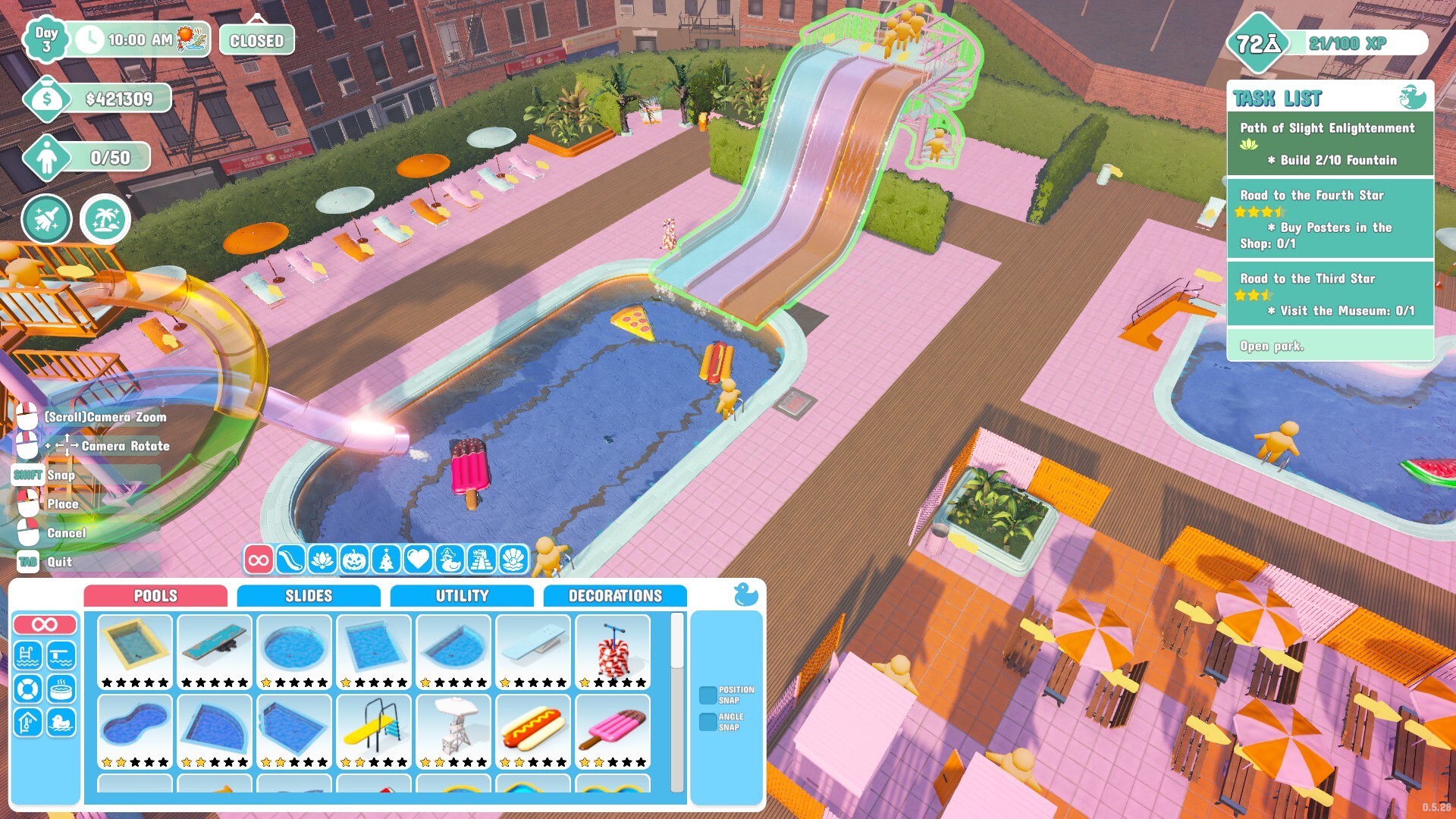
Plan the operating space before drawing the slide
A slide begins as a construction decision, but it becomes an operating responsibility as soon as visitors use it. Before shaping the route, read the area around the intended start, path, exit, and pool. Leave enough visual and physical clarity that the first-person player can understand where the attraction begins, where it ends, and how to reach nearby service work. The official material confirms direct cleaning, repairs, rescues, food, tickets, and staff management, so a dramatic track should not erase the paths that make those duties possible.
Use the existing park as the boundary for the first draft. Identify what the new slide adds to the attraction mix and what extra attention it may create. A longer or more complex form can be visually distinctive, yet the reviewed sources do not establish a numeric rule that turns complexity into a guaranteed rating result. Build for legibility first, then use the live park response to decide whether the design is helping slide fun without creating avoidable confusion elsewhere.
Space planning also protects later growth. Version 1.0 adds research themes and custom layouts, which makes it tempting to fill every open area immediately. Preserve expansion room and keep major routes readable from ground level. A park that can accept another attraction, service point, or research-driven theme without dismantling its operating structure is easier to improve than a park whose first showpiece consumes every useful connection.
- Mark the intended start, track corridor, exit, and pool context.
- Check that player movement and direct maintenance work remain readable around the build.
- Reserve expansion space instead of treating every open area as part of the first layout.
- Open the attraction only after the surrounding park can support the new operating load.
Use loops and spirals as verified design language, not a score promise
Version 1.0 confirms a custom slide system for player-built layouts, while first-party screenshots show loops and spirals as part of the available construction language. Those shapes are useful evidence that the editor supports expressive routes. They are not evidence that a particular number of loops, a specific height, or one repeated pattern produces a known fun score. This guide therefore treats shape as a design choice to test in the live park rather than a hidden formula to optimize on paper.
Build the route in readable segments. Watch how the slide changes direction, how its vertical movement relates to nearby structures, and whether the completed form is visually understandable from several parts of the park. A complex silhouette can give the attraction identity, but complexity should remain intentional. If the route becomes difficult to read or crowds paths and service areas, simplify the form before adding another dramatic element.
After the slide opens, inspect it within the four named rating areas. Slide fun is the direct category, yet cleanliness, food quality, and guest happiness still belong to the same park rating. A strong attraction cannot excuse a neglected operating layer. Record the practical effect of the build, then change one major feature at a time so you can connect the adjustment to what you observe instead of relying on an unsupported tier list.
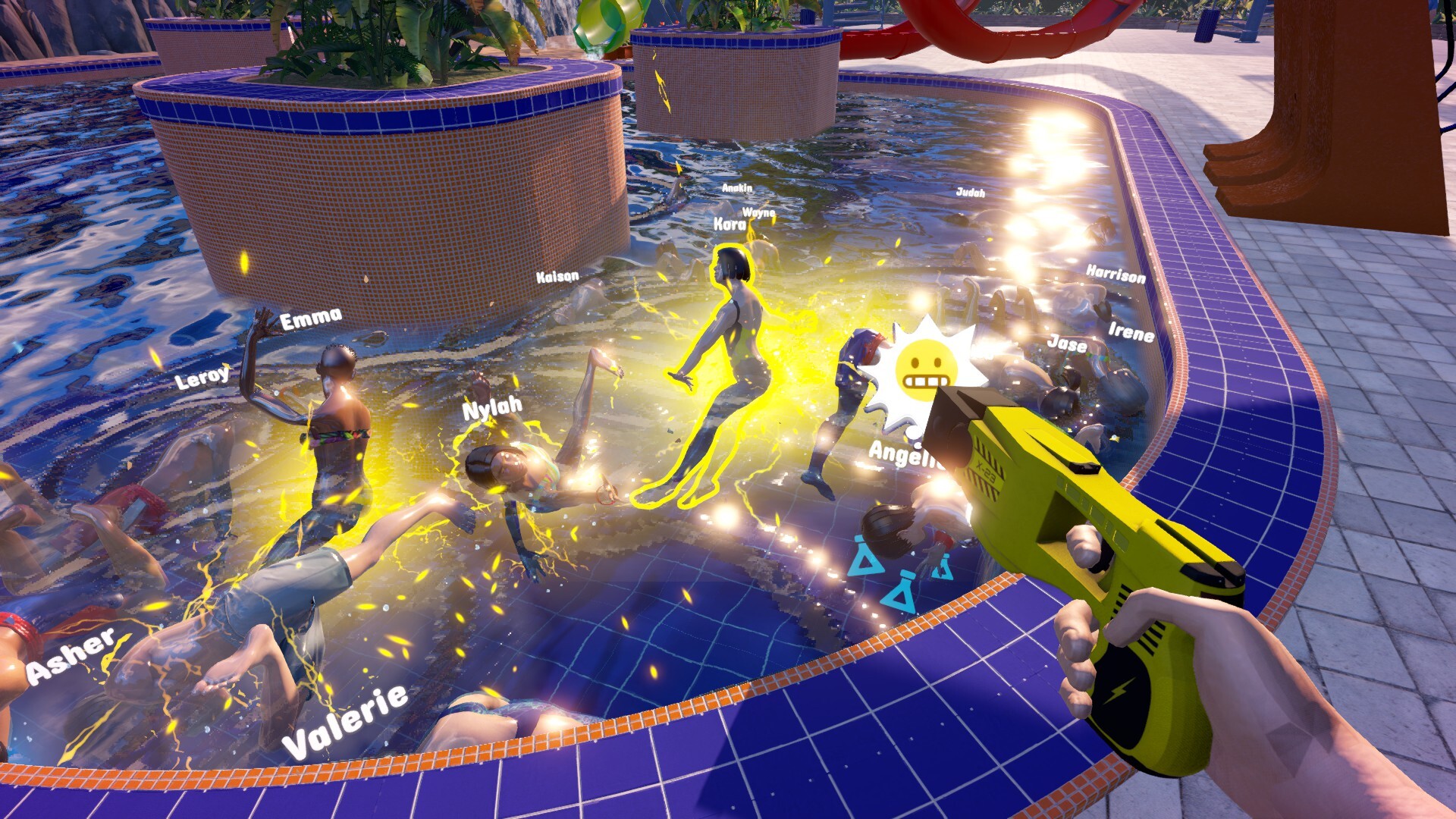
Connect every slide to a usable pool-and-service context
Slides and pools answer related but different build questions. The slide defines a route and experience; the pool and surrounding space help determine how the attraction sits inside the park. Review the end of the route, the pool context, visitor movement, and the player’s ability to reach nearby work. That review keeps the attraction grounded in the first-person management loop rather than judging the track only from the editor view.
The official core description places rescues and repairs beside construction. That relationship matters when you decide where the finished attraction belongs. A route that looks exciting but blocks clear access can make direct work harder to understand. The handoff does not publish mandatory clearance dimensions, so use visible separation and readable movement rather than an invented measurement. The Pools reference remains concise because the source material supports this relationship but not a catalog of verified pool statistics.
Food, tickets, staff, and cleanliness also shape the surrounding operation. Avoid treating the slide exit as the only destination that matters. Visitors participate in a larger park loop, and the player moves through that loop to respond. A successful attraction plan therefore includes the service context that keeps the area usable after the visual construction work is complete.
| Review area | Question to answer | Confirmed system link |
|---|---|---|
| Route readability | Can the start, major turns, and exit be understood from the park? | Custom player-built slide layouts |
| Pool context | Does the route end in a clear attraction area with usable surrounding space? | Slides and pools |
| Player access | Can cleaning, repair, and rescue work remain reachable? | Direct first-person operations |
| Guest-facing support | Can food, tickets, staff, and movement coexist around the attraction? | Park management |
| Rating response | How does the new build sit beside cleanliness, food quality, and happiness? | Four-input park rating |
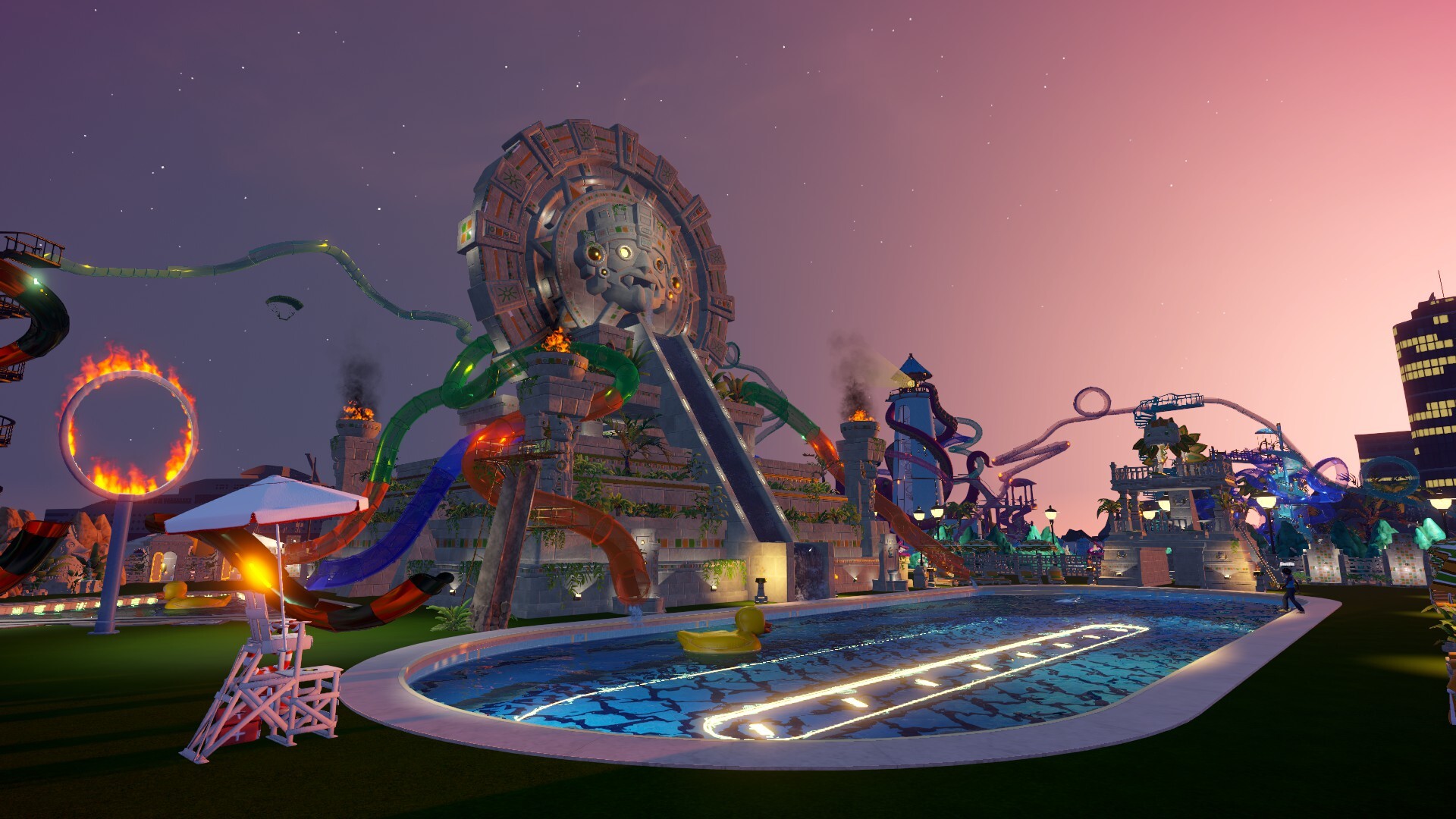
Open the attraction, then review one layer at a time
Once the slide is usable, move from construction mode to observation. Check whether the attraction adds a clear activity to the park and whether the surrounding operation remains manageable. The game’s named rating inputs provide a disciplined review order: slide fun for the attraction itself, cleanliness for the condition of the area, food quality for the guest service layer, and guest happiness for the wider outcome. That order is more dependable than changing several unrelated systems at once.
Keep the first revision small. If the route is visually confusing, simplify a major turn or shape. If the area is difficult to service, improve access and surrounding organization. If the attraction is successful but the park rating still stalls, investigate the non-slide inputs before assuming that another track segment is the answer. The official material confirms the relationships but not a numeric diagnostic panel that this wiki can reproduce.
Weather and night operation can change the broader park context through bonuses, penalties, employee pay, and cheater behavior. Those modifiers belong primarily to Park Management, but they are a reminder that the same attraction can sit inside different operating conditions. Judge a slide as part of the current park session and avoid converting one observation into a timeless universal score.
Expand only when the current attraction remains legible
A good expansion keeps the park readable while adding a new reason to visit an area. Before building another custom slide, confirm that the current route, pool context, service access, and guest-facing support still make sense. Preserve space for the next research theme or attraction rather than forcing every later addition through the same crowded corridor. This is a layout discipline, not a claim about hidden capacity limits.
Research adds Aztec, Sea, and Pirate themes in version 1.0, giving later builds a verified thematic direction. Use those themes to distinguish areas without assuming that a theme carries a specific rating bonus. The official announcement supports the names, while exact unlock nodes and costs remain part of the live research interface. Build the visual identity after the operating plan can sustain it.
The final question is whether the new construction improves the whole park, not whether it is the largest object on the map. The diamond five-star goal reflects multiple quality areas. An attraction contributes through slide fun and the experience around it, while daily operations protect cleanliness, food quality, and happiness. Keep that relationship visible and the slide system becomes a creative tool inside a reliable park rather than a disconnected construction toy.
- The current slide has a readable start, route, exit, and pool context.
- Direct cleaning, repair, and rescue access remains clear.
- Food, tickets, staff, and visitor movement still fit the area.
- The next build has a specific purpose instead of repeating complexity.
- Research themes are used as verified themes, not invented performance modifiers.
Frequently asked questions
Do loops and spirals guarantee a better slide?
No verified first-party source in the handoff provides a formula that converts a loop, spiral, height, or segment count into a guaranteed rating. Version 1.0 media confirms those shapes as part of custom slide construction. Build them deliberately, then judge the live attraction and surrounding park operation.
What should I plan around a custom slide?
Plan the start, route corridor, exit, pool context, visitor movement, and access for direct work such as cleaning, repairs, and rescues. Also leave room for food, tickets, staff, and later expansion. The official material does not publish mandatory clearance measurements, so prioritize visible legibility.
Should I add another slide when the park rating stalls?
Not automatically. Inspect slide fun, cleanliness, food quality, and guest happiness separately. A successful attraction may coexist with weak service or maintenance. The reviewed sources confirm the four inputs and the five-star direction but do not provide a complete threshold formula.