
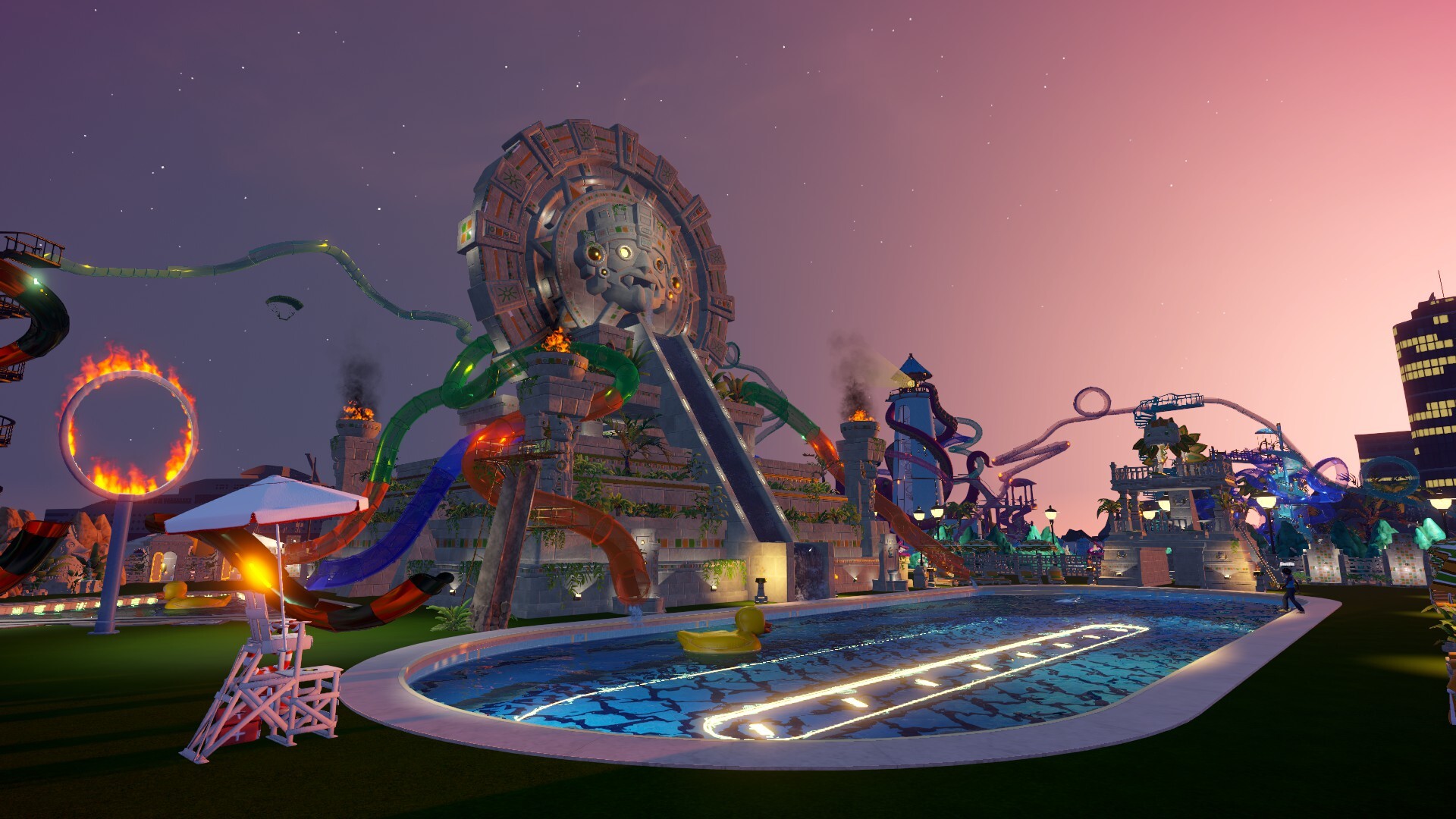
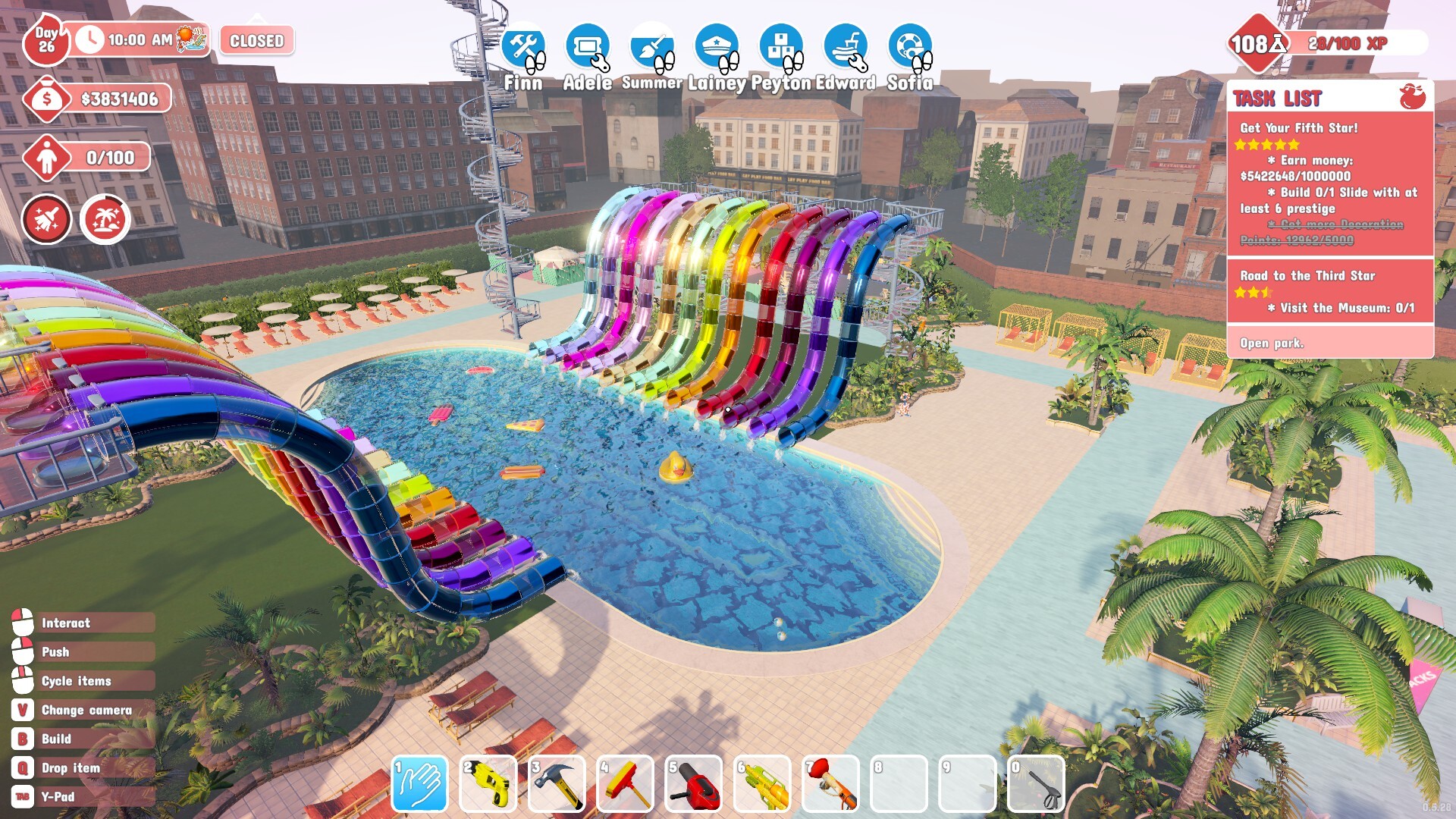
Treat a pool as attraction space and operating space
A pool can support the visual and practical context of a slide, but it also sits inside the area where the player performs direct work. Read the pool together with its slide approach, exit, nearby paths, and service access. The official game description connects construction to rescues, repairs, and cleaning, so a clear pool area must remain understandable after visitors arrive.
The handoff does not establish one best pool footprint or a universal capacity formula. Use visible separation and a layout you can navigate in first person. Preserve enough room to see where an attraction ends, reach the surrounding area, and respond without turning every open edge into another object or path.
A pool also belongs to the park rating context. Slide fun is one named input, while cleanliness, food quality, and guest happiness remain separate inputs. Improving the attraction area should not hide weak service or maintenance elsewhere. Review the whole park after opening a new pool-and-slide area.
- Keep the slide exit and pool context visually readable.
- Preserve first-person access for cleaning, repairs, and rescues.
- Leave clear movement space around guest-facing services and paths.
- Judge the area beside all four park-rating inputs, not slide fun alone.
Run a simple opening check before expanding
Before treating the area as finished, walk it at ground level. Confirm that the pool, slide route, visitor movement, and nearby service points can be understood without relying only on an overhead construction view. If the player cannot read the space quickly, simplify the arrangement before adding decoration or another attraction.
After opening, watch the operating load. Cleaning, repairs, and rescues are documented parts of the game, while tickets, food, and staff support the broader park. The sealed evidence does not publish mandatory spacing or response thresholds, so use the live park to identify where access or service becomes unclear.
Expand only after the current area remains legible. Research themes such as Aztec, Sea, and Pirate can later shape the park’s presentation, but the announcement does not support a claim that a theme changes pool performance. Keep theme choices separate from unverified mechanical bonuses.
- Walk the slide approach, pool edge, exit area, and nearby paths in first person.
- Check direct access for cleaning, repair, and rescue work.
- Confirm tickets, food, staff, and visitor movement remain coherent nearby.
- Open the area and review cleanliness, slide fun, food quality, and happiness.
- Add another attraction only when the current pool context stays readable.
Frequently asked questions
What is the best pool size in Waterpark Simulator?
The sealed first-party handoff does not provide a universal best size, capacity table, or rating formula. Build for a readable slide-and-pool context, first-person access, and the surrounding operating load. Treat the live park as the place to compare layouts, because the reviewed sources confirm the building and operating systems without establishing one optimal pool footprint.
What should I leave space for around a pool?
Leave readable movement and access for the slide exit, visitors, cleaning, repairs, rescues, and nearby guest-facing service. No mandatory clearance measurement is supported by the reviewed sources. The practical objective is visibility and workable first-person access, not a fabricated tile count or distance that the official material never states.
Do research themes change pool performance?
Aztec, Sea, and Pirate are verified research themes, but the handoff does not establish a pool-performance bonus for any theme. Use the current Museum and live park interfaces to inspect what a theme changes, and do not assume that its visual identity automatically improves capacity, cleanliness, fun, happiness, or the five-star rating inputs.